Managed Web Services / Digital Strategy
Self-Managed, Hybrid or Fully Managed: Which Digital Presence Model Is Right for You?
Compare self-managed, hybrid and fully managed website support to choose an approach that fits your resources, objectives and preferred level of involvement.

PUBLISHED BY
Présence Marketing
Managed Web Services, SEO & Digital Strategy
01
Self-managed, hybrid or fully managed: why this choice matters
A website does not stand still. Services evolve, content becomes dated, campaigns start or stop, forms need checking and your organization’s priorities change. That means deciding who looks after your digital presence between major projects.
There is no single right model. Some teams want to manage almost everything themselves. Others want a partner to handle execution and strategy. Between those options, a hybrid approach can offer a highly effective balance.
The best fit depends less on organization size than on your available time, skills, pace of change, growth objectives and the level of risk you are comfortable managing.
02
The three models at a glance
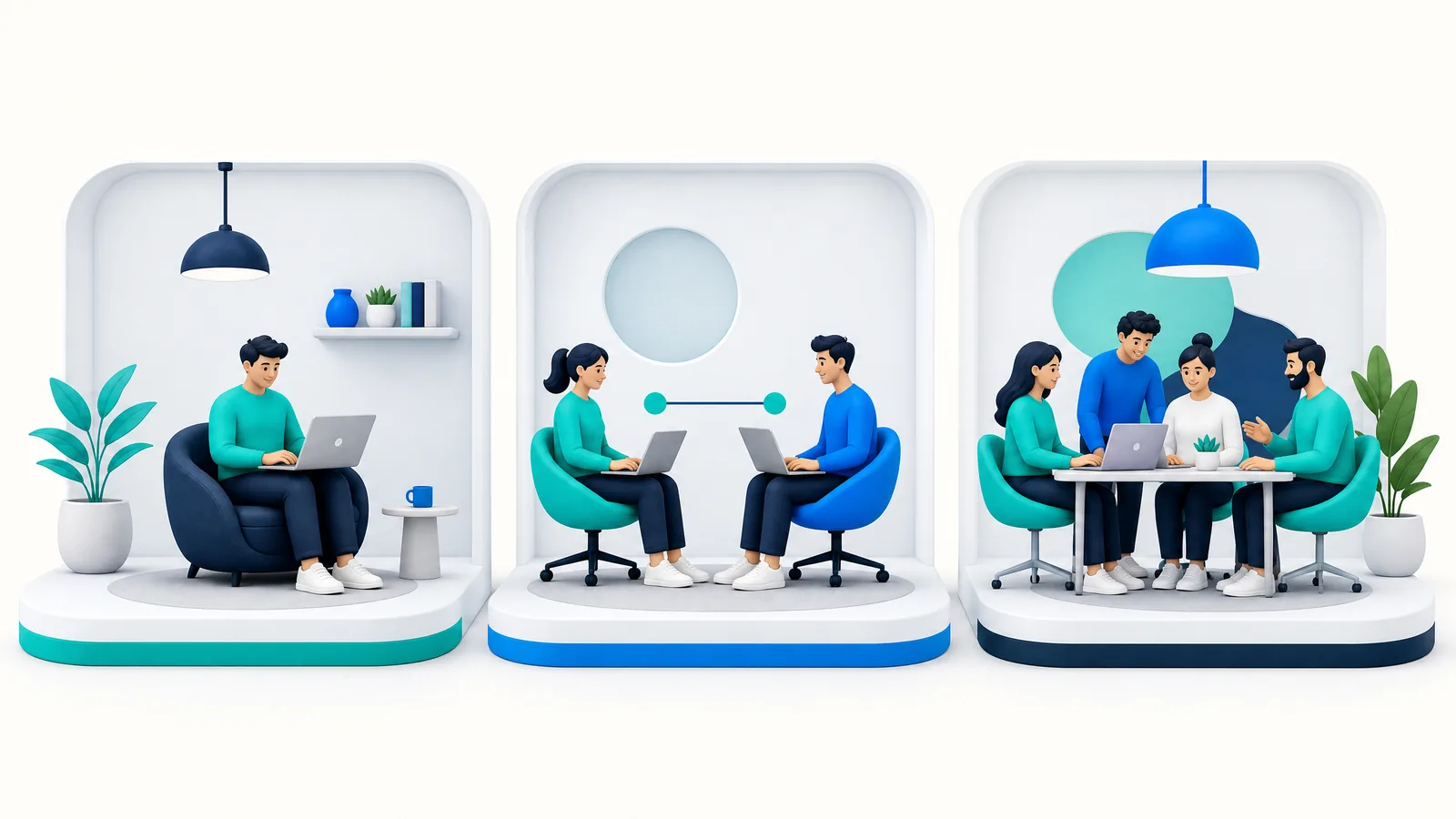
Self-managed support means your team completes most updates and coordinates suppliers when needed. Hybrid support divides responsibilities between your team and an external partner. Fully managed support gives a specialized team responsibility for coordinating and completing agreed work, within defined approvals.
These are not fixed labels. An organization may begin self-managed, add hybrid support during a growth period and delegate more when its website becomes more strategic.
- Self-managed: your team completes and directs most activities.
- Hybrid: responsibilities are shared according to each party’s strengths.
- Fully managed: a partner coordinates and completes agreed work.
03
1. Self-managed support: when your team keeps the lead
In a self-managed model, your organization updates pages, publishes articles, keeps contact information current and sets website priorities. It may use a simple CMS or management dashboard and seek specialist help for specific projects.
This approach can be appropriate when one person or a small team already has time, understands the website and can keep important work moving. It may also suit an organization whose website changes little between campaigns or peak periods.
04
The strengths of self-managed support
Self-management lets your team publish small updates quickly when responsible people know the tools. It also keeps content close to your organization, which can be valuable when your team frequently needs to clarify a specialized offer or share timely information.
- Your team maintains day-to-day control of content.
- Simple updates can be completed when needed.
- Budget can focus on specialized or occasional needs.
- Internal knowledge can directly guide content decisions.
05
What self-managed support actually requires
Self-management works best when responsibility is clear. Someone needs to know who may edit the website, who approves changes, where access is documented, how English and French content are coordinated and how issues are reported.
It also requires consistent process. An important page change usually deserves checks for mobile layout, links, forms, SEO title, description, redirects when a URL changes and consistency with other channels. Without a process, small tasks can build up or create inconsistencies.
06
2. Hybrid support: sharing responsibilities intelligently
Hybrid support combines your internal knowledge with a Web partner’s expertise. Your team might provide information, approve priorities and publish simple updates. The partner can handle more technical work, site structure, SEO, performance, campaigns or conversion improvements.
This model often avoids two extremes: trying to manage everything in-house without enough time, or handing everything off without staying involved in decisions that depend on your direct knowledge of the organization.
LET’S TAKE STOCK
Not sure whether to keep the work in-house or delegate?
A short conversation can identify the tasks taking your team’s time, what should stay internal and the opportunities that could benefit from specialist support.
07
How responsibilities can be shared in a hybrid model
A strong split begins with each side’s actual strengths. Your team knows customers, services, operational realities and internal approval processes. The partner brings a method for turning that knowledge into pages, content, journeys, technical improvements and recommendations.
The split can change over time. Your team may keep short updates and contact information, while the partner handles new pages, translations, SEO/AEO/GEO, forms, advertising and reporting.
- Internal team: expertise, approvals, updates and business priorities.
- Partner: architecture, design, development, SEO/AEO/GEO, performance and analysis.
- Shared: content calendar, campaigns, conversion journeys and measurement.

08
3. Fully managed support: a team coordinating your presence
With a fully managed approach, a partner becomes the team coordinating the agreed elements of your digital presence. Depending on scope, this may include updates, new pages, content, SEO, AEO and GEO, maintenance, conversion, advertising, reporting and proactive recommendations.
This does not mean your organization disappears from the process. It means requests and opportunities are translated into action by a team with a complete view. Priorities, access, budgets and approvals are still defined with you.
09
When is fully managed support useful?
It can be particularly useful when no one internally has time to coordinate the website, several tools and providers are involved, the site plays an important acquisition role or improvement opportunities are regularly postponed.
It can also be a strong fit when your organization wants to publish more, launch a campaign, improve conversion tracking or ensure continuity through staffing changes. The main question is not whether to delegate everything; it is whether specialized coordination would create more value than the current fragmented approach.
10
Delegating does not mean losing control
A strong management agreement clearly describes what is delegated, expected timelines, what needs approval and which information your organization can access. You can establish approval points for new content, campaigns, spending or more significant changes.
Transparency matters. Your organization should always know which priorities are active, what results are being observed, what access exists and what decisions are being recommended. A strong partner simplifies decisions without making them for you.
11
Five questions to choose the right model
Before choosing, assess your actual situation rather than the option that appears simplest on paper. Your answers may show that a hybrid model fits better than complete self-management or a fully managed approach.
- Who truly has the time and skills to manage the website each month?
- How often do content, services, campaigns or pages need updating?
- Which activities need technical, SEO/AEO/GEO or conversion expertise that is not available internally?
- Which decisions must remain in-house, and which tasks can be delegated without losing important context?
- What happens if the person who knows the website becomes unavailable?
The right model fits your actual capacity; it should not require your organization to become an agency internally.
12
You do not have to choose one model forever
Your level of support can evolve with your objectives. An organization may start with a self-managed interface, add support for content or SEO, then move toward more comprehensive management before a campaign or growth period.
The important thing is to document responsibilities, retain access and review what is working regularly. A management decision should make your work easier, protect website value and help your organization move forward.
13
A decision that should support your organization
Self-managed, hybrid or fully managed: none of these approaches is automatically better. The right option is the one that helps your organization remain accurate, visible, credible and able to act without creating unnecessary operational burden.
Présence Marketing can help you clarify what should remain in-house and which responsibilities could benefit from specialist Web support.
FAQ
Frequently asked questions
What is the difference between self-managed, hybrid and fully managed support?
Self-managed support is directed mainly by your team. Hybrid support shares responsibilities with a partner. Fully managed support delegates coordination and agreed activities to a specialized team.
Does fully managed support mean I lose access to my website?
No. Access, approvals and responsibilities should be clearly defined with your organization.
Which model suits a small organization?
A small organization can choose any of the three. The best fit depends on time, skills, the pace of change and objectives.
Can I start with a hybrid model?
Yes. Hybrid support can be a practical way to keep simple work in-house while getting specialist help for more complex priorities.
How do I know which tasks to delegate?
Start with tasks that consume significant time, require specialist expertise or repeatedly remain unfinished: SEO, maintenance, new pages, content, campaigns, conversion or integrations.
What level of management would be most useful for your organization?
Tell us about your website, team and priorities. Présence Marketing can help define a self-managed, hybrid or fully managed approach that fits your organization.
RELATED SOURCES